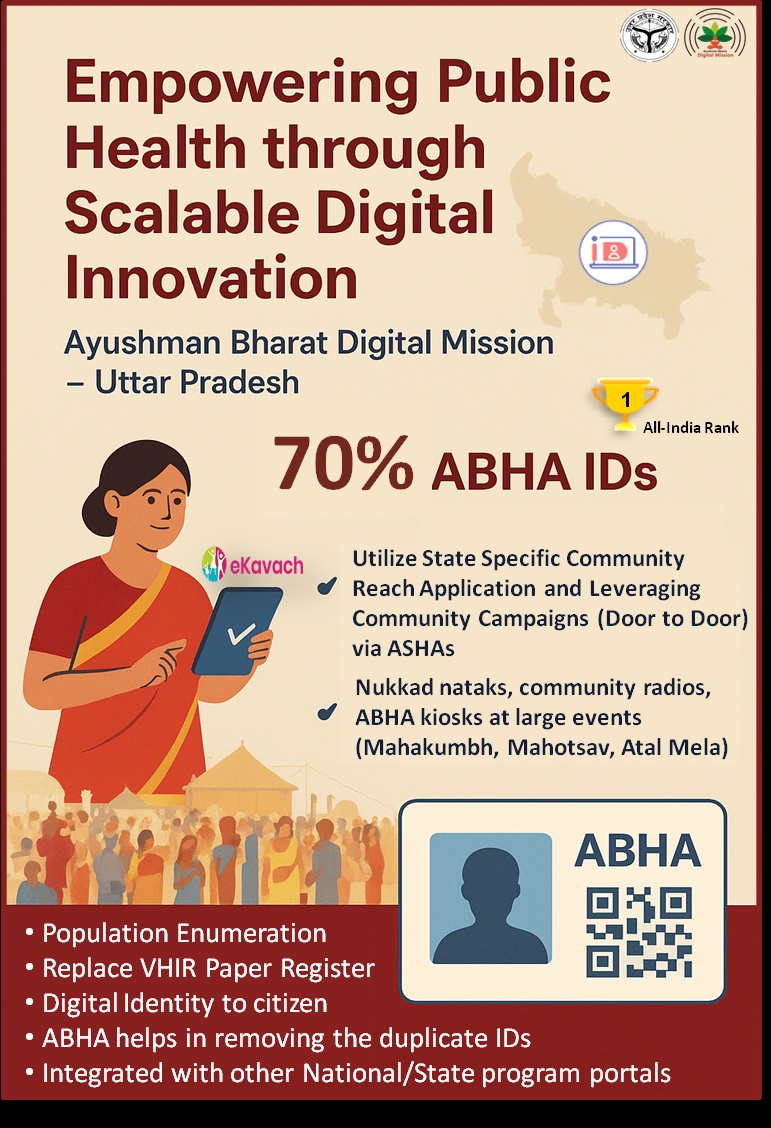
Uttar Pradesh has made significant progress in the creation and adoption of Ayushman Bharat Health Accounts (ABHA), positioning itself as a frontrunner in the national rollout of the Ayushman Bharat Digital Mission (ABDM). Despite being the most populous state in the country, Uttar Pradesh has successfully achieved 70% population coverage under ABHA, a milestone that highlights both the scale and efficiency of its implementation efforts.
Through the combined use of its state-owned e-Kavach platform, large-scale door-to-door enumeration by frontline workers, and widespread awareness campaigns, the state has emerged as the No. 1 state in the country for ABHA generation, setting an example for other states in leveraging digital health for inclusive citizen coverage.
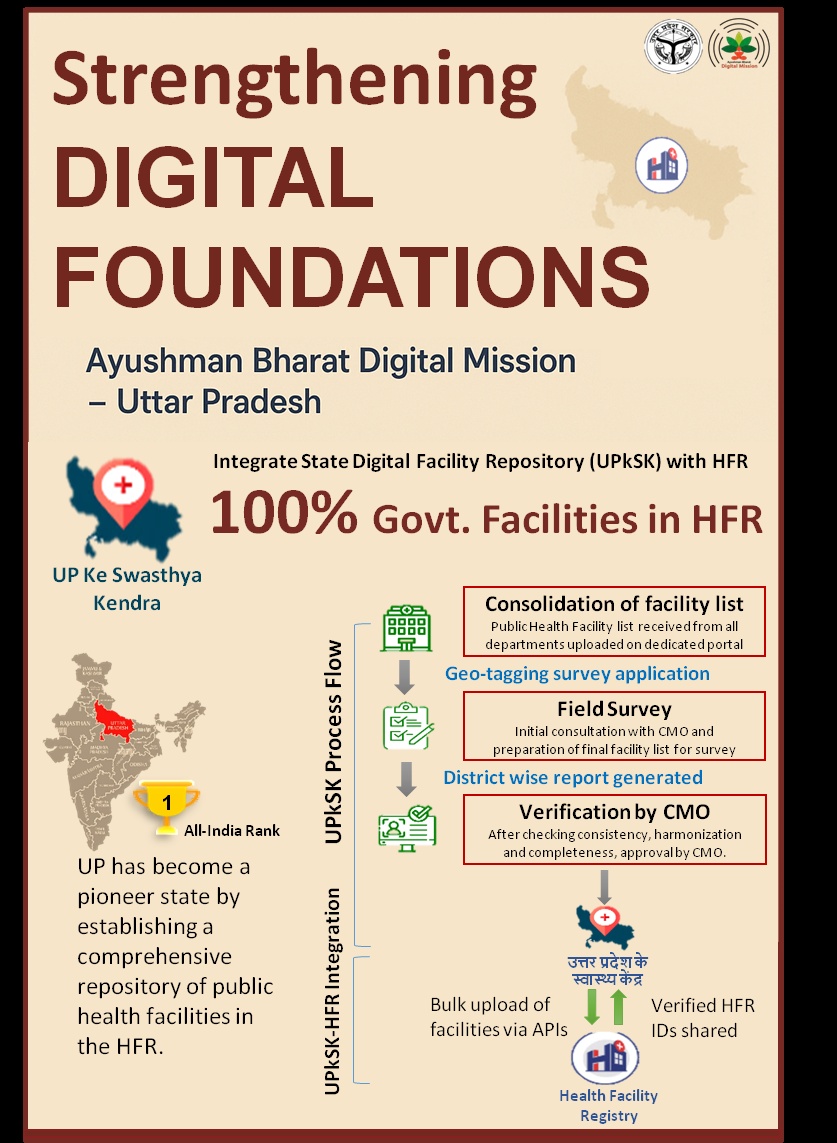
Uttar Pradesh has emerged as a national leader in strengthening the digital health ecosystem by successfully integrating its State Digital Facility Repository – Uttar Pradesh ke Swasthya Kendra (UPkSK) with the Health Facility Registry (HFR) under the Ayushman Bharat Digital Mission (ABDM).
This pioneering initiative enabled the state to achieve 100% coverage of government health facilities in the HFR, making it the first state in India to establish a comprehensive, verified, and standardized digital repository of public health facilities. As the foundational building block of ABDM, the HFR serves as the single source of truth for facility information nationwide, and Uttar Pradesh’s proactive approach ensures interoperability through seamless data exchange between state and national platforms, authenticity through structured validation at district and state levels, and efficiency by creating a centralized, geo-tagged repository that strengthens planning, monitoring, and governance.
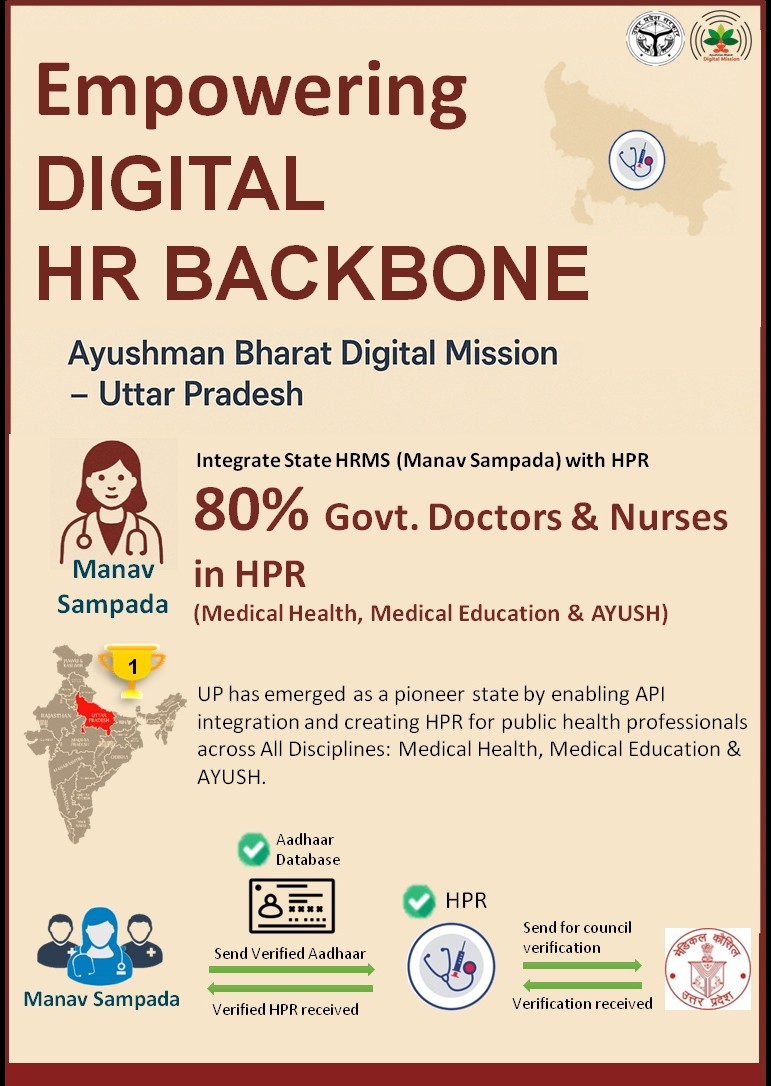
Uttar Pradesh has emerged as a pioneer state in building a strong digital human resource backbone for health by integrating its State Human Resource Management System (HRMS) – Manav Sampada with the Health Professional Registry (HPR) under the Ayushman Bharat Digital Mission (ABDM).
Through this initiative, the state has successfully onboarded 80% of government doctors and nurses into the HPR, covering professionals across Medical Health, Medical Education, and AYUSH disciplines, thereby becoming a national leader in creating a verified and interoperable database of health professionals. As a foundational pillar of ABDM, the HPR serves as the single source of truth for healthcare professionals, and Uttar Pradesh’s proactive integration ensures interoperability through seamless HR data exchange between state and national platforms, authenticity with Aadhaar and council-verified professional records, and efficiency by enabling centralized, transparent workforce planning and deployment.
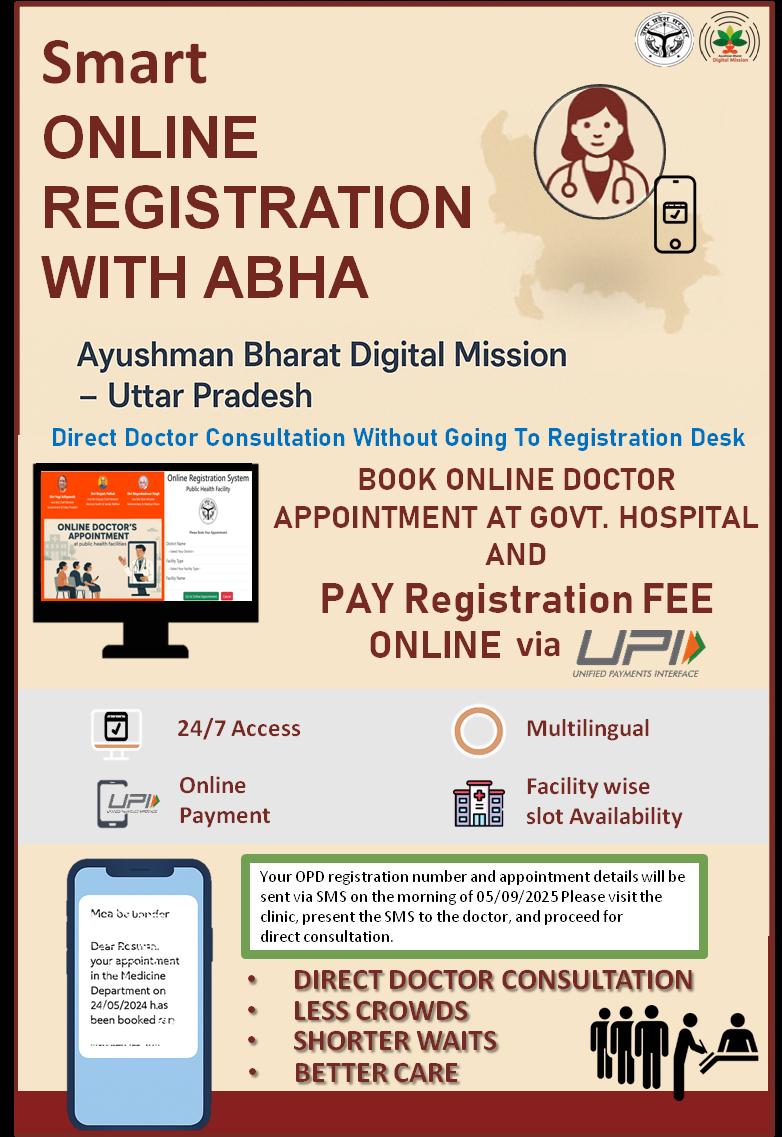
Uttar Pradesh has taken a significant step in transforming patient experience at government hospitals by introducing a Smart Online Registration System (ORS) integrated with the Ayushman Bharat Health Account (ABHA) under the Ayushman Bharat Digital Mission (ABDM).
This initiative enables patients to conveniently book doctor appointments online, pay a nominal ₹1 registration fee via UPI, and proceed for direct consultation with doctors without visiting registration counters, thereby reducing wait times and easing overcrowding. By addressing long-standing challenges such as long queues, manual cash handling, and patient inconvenience, the ORS ensures efficiency through 24/7 digital booking, transparency via secure online payments, accessibility with a multilingual and mobile-friendly platform, and an overall better patient experience with shorter waits, less crowding, and improved care.
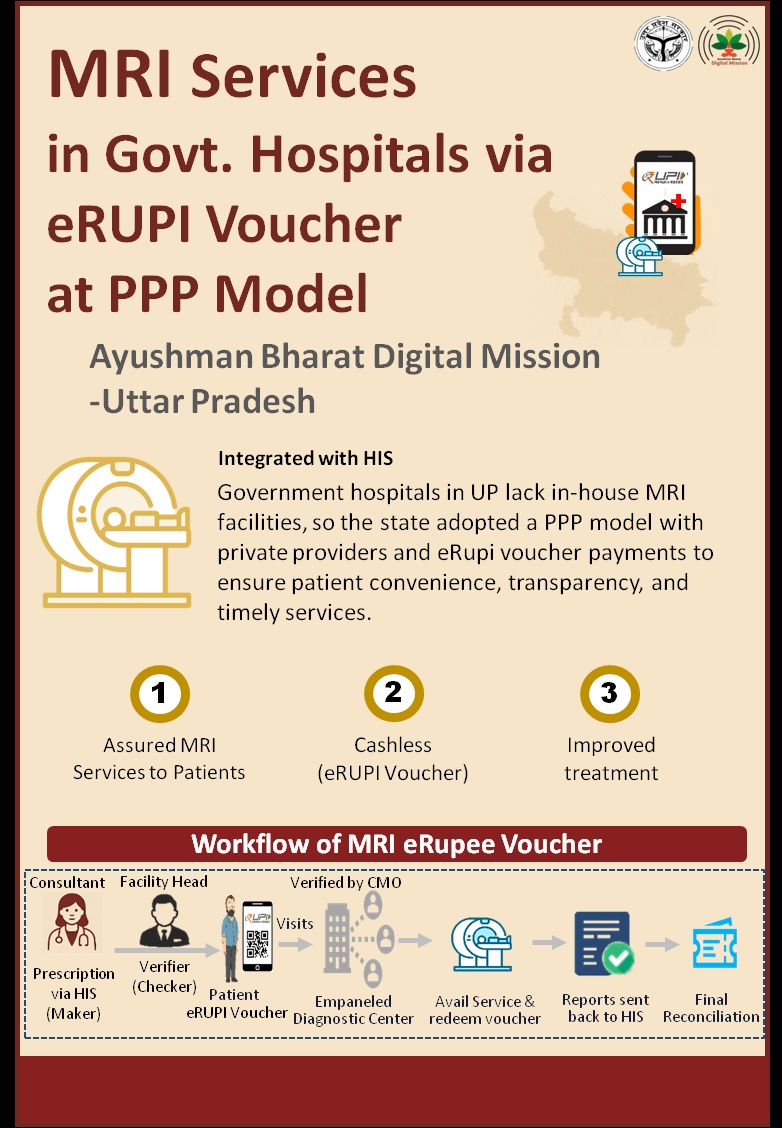
Many government hospitals in Uttar Pradesh lack in-house MRI facilities, limiting timely access to essential diagnostics for patients. To address this gap, the state has introduced an innovative Public-Private Partnership (PPP) model, integrating empanelled private MRI centers and enabling cashless digital payments through eRupee vouchers integrated with the state’s HIS platforms (NIC’s eHospital and CDAC’s eSushrut) under the Ayushman Bharat Digital Mission (ABDM).
In this system, doctors prescribe MRI tests through HIS, orders are verified, and an eRupee voucher is auto-generated and sent via SMS, which patients can redeem at any empanelled MRI center. The service provider conducts the MRI, uploads the report into HIS, and only then redeems the voucher, ensuring payments are strictly linked to service delivery. This patient-centric model not only guarantees access to quality diagnostics even where government facilities are unavailable but also ensures convenience, transparency, interoperability, and accountability, thereby strengthening patient trust, improving timely care, and providing a replicable best practice for other states to adopt for high-cost diagnostic services such as MRI, CT scans, and pathology.
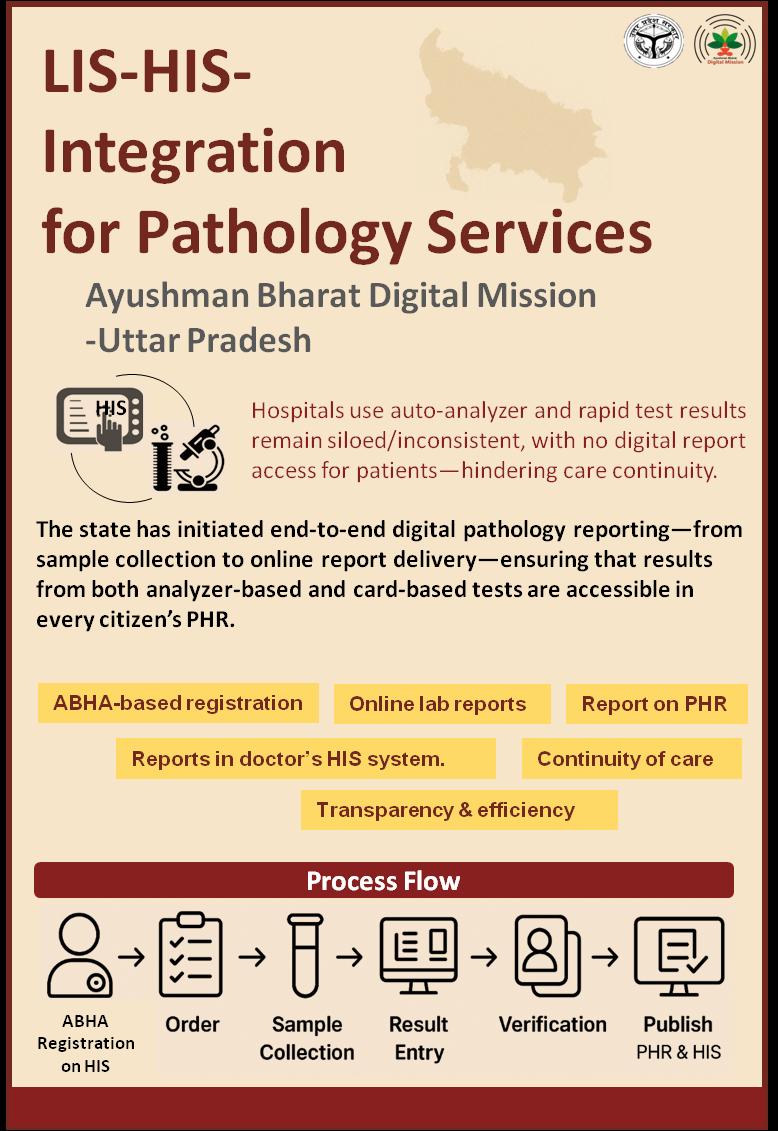
In government hospitals, pathology services are functional but results often remain siloed, inconsistent, and paper-based, leaving patients without digital access to reports and disrupting continuity of care. To overcome this challenge, Uttar Pradesh has implemented an end-to-end digital pathology model that integrates LIS–HIS workflows across all levels of care.
In this system, analyzer-based labs are connected through LIS–HIS integration so that orders, barcodes, results, and authorized sign-offs flow, while card-based tests use standardized digital templates with a minimum dataset capturing ABHA-linked patient details, test kit information, results, interpretation, and verifier. Once authorized, reports are auto-published to both the HIS and PHR, ensuring that citizens can access their results anytime while doctors simultaneously view reports within HIS for continuity of care. With centralized code harmonization, LOINC mapping, and CDAC/NIC-supported statewide rollouts, the model ensures efficiency, interoperability, transparency, and patient empowerment, making it a replicable best practice for other states to strengthen digital diagnostic services under ABDM.